Ronnie Genotti: The Flip Side of Otherness
12/30/2024
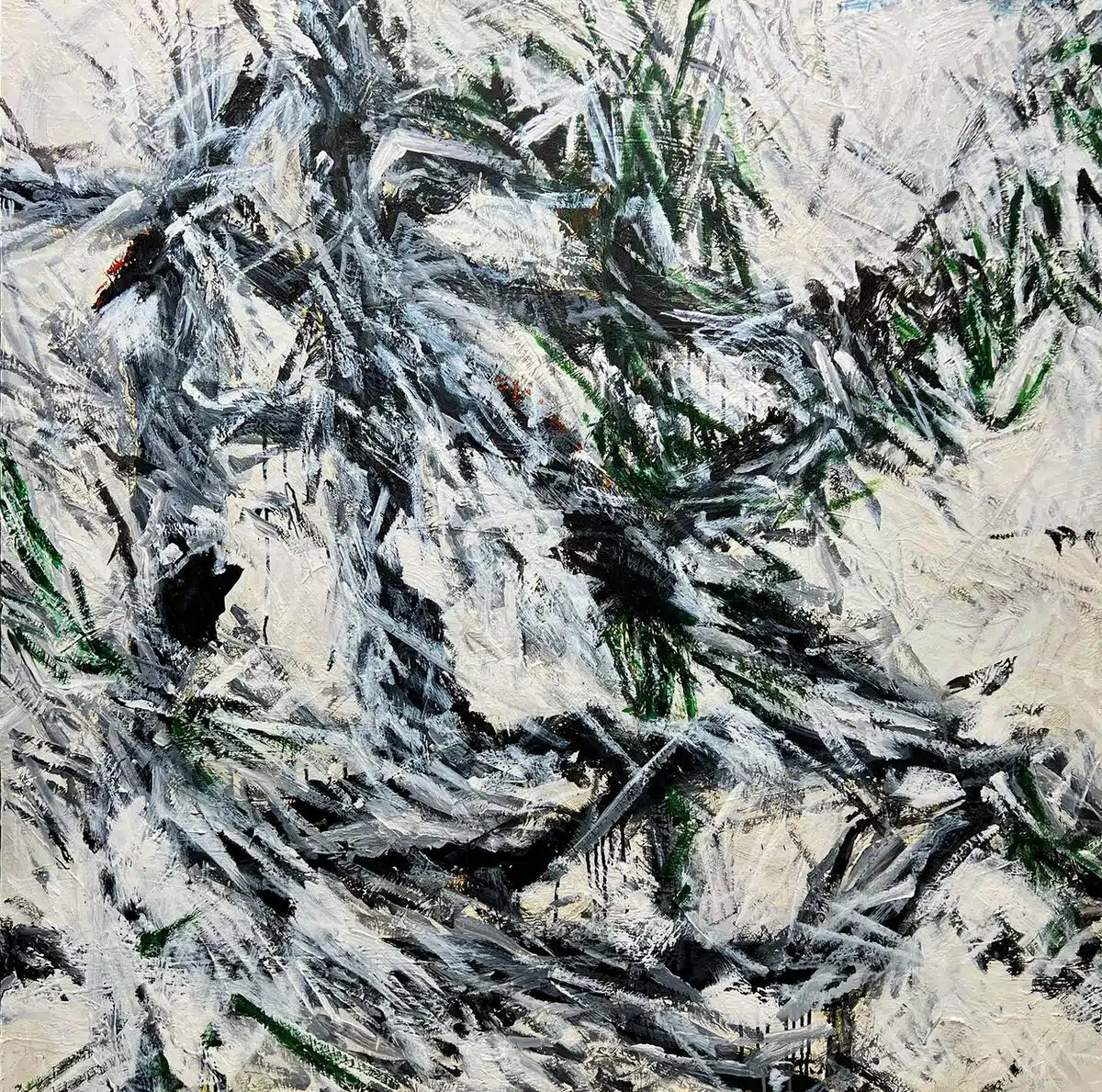
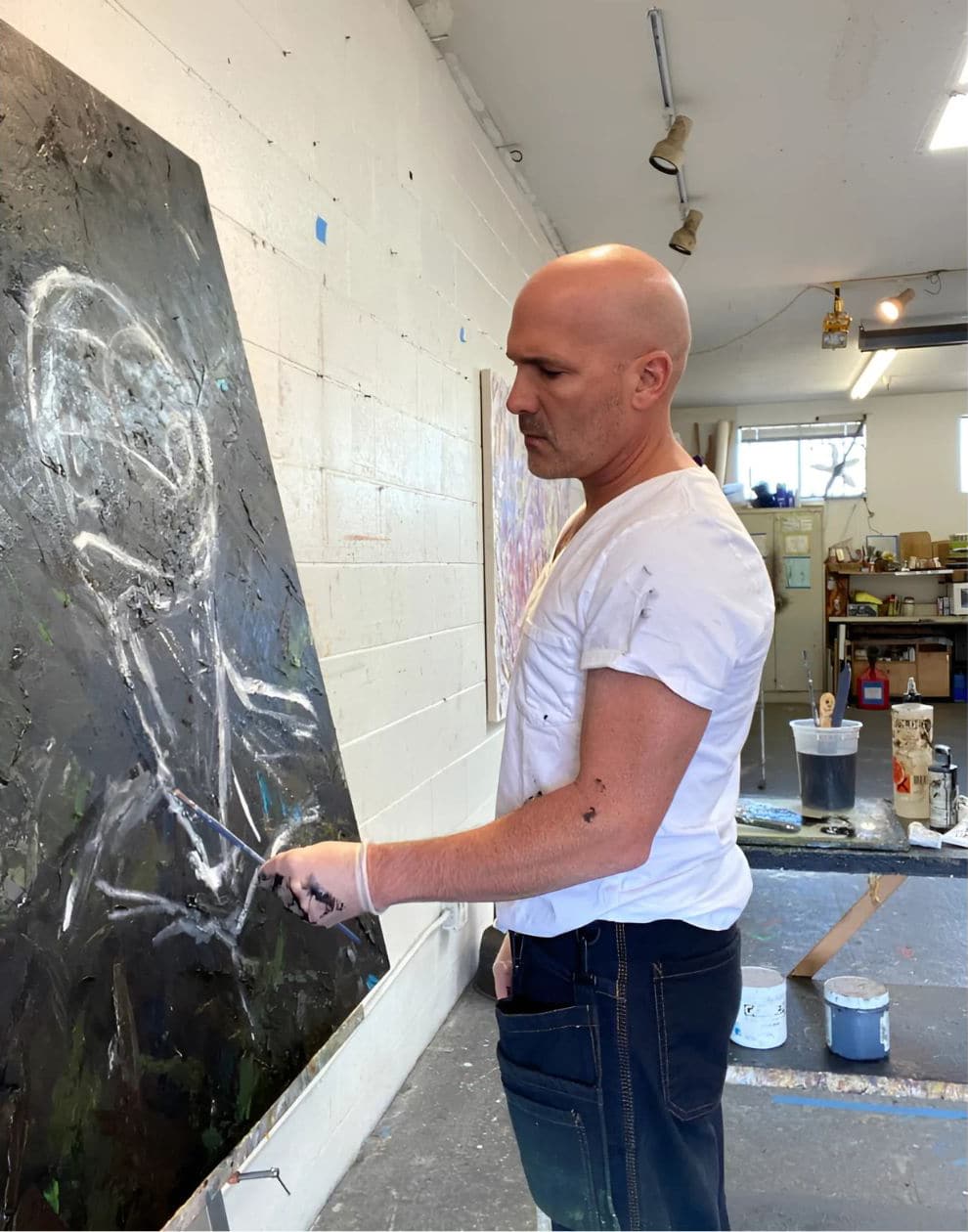
Ronnie Genotti’s art is deeply influenced by his experiences growing up queer in 1970s Detroit, exploring universal themes like religion, bullying, and the AIDS crisis. His abstract works aim to capture raw, emotional expressions of past experiences—moments that shape lives yet are blurred by memory. By translating these into universal motifs, Genotti invites viewers to engage with the emotional landscapes of his work, connecting them to their own imperfect journeys.
Now based in San Francisco, Genotti works with materials like pastels, oils, and acrylics, focusing on movement, color, and line to create dynamic compositions. His process prioritizes the relationship between artist, subject, and image, ensuring the construction of each piece is as meaningful as the themes it explores. “My goal is not for the viewer to understand the references behind a particular piece (what it’s “about”) but rather I hope they’ll grok, wholly and deeply, the emotional landscape of the images to apply to their own imperfect existences,” he says in his artist statement.
In this interview, he reflects on the bittersweet memories of his childhood and his experience of growing up queer in Michigan, exploring how these moments have profoundly shaped his art.
Tell me about your new body of work.
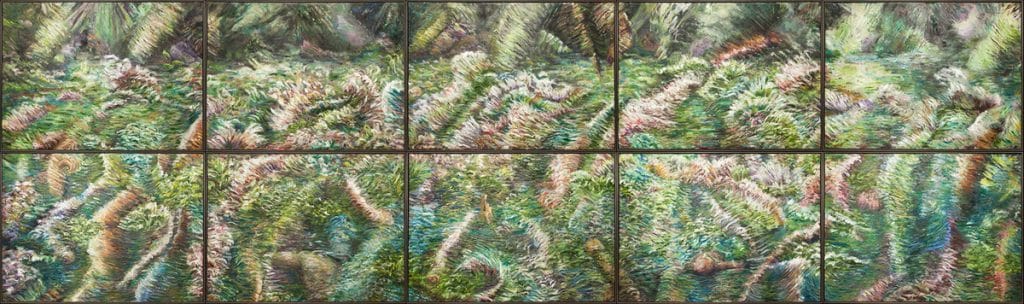
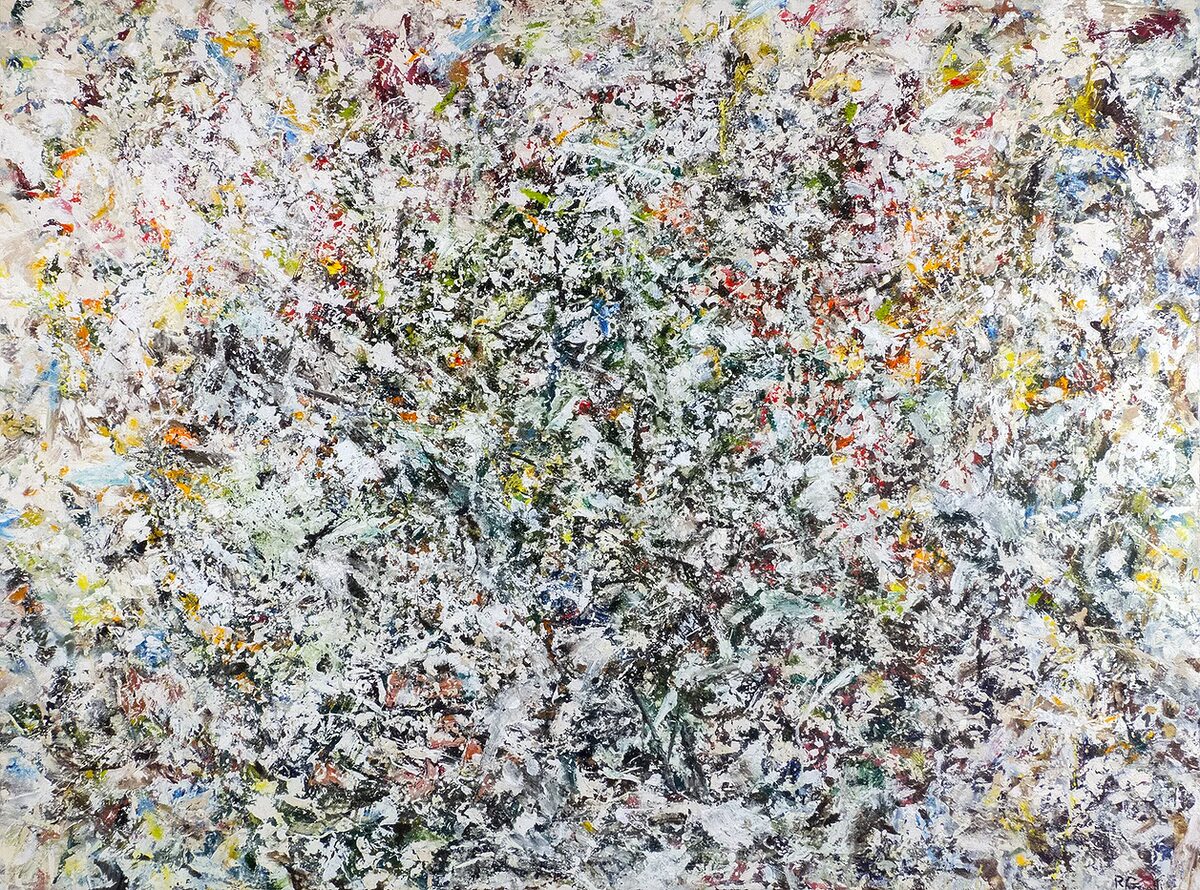
I’ve been working through a series based on “the woods,” a field of abandoned farmland that existed behind the suburban house where I grew up, covered with scraggy trees: gum, ash, crabapple. High in the trees we wedged a bench seat from an old Chevy or Buick, our fort. That place was my spaceship, my hideout, my mausoleum, where I escaped the terrors that taunt the typical ten-year-old, at least the kind who spends his days staring up at branches, wondering what the view from his grave would look like.
You said, “I surface those memories that haunt us, that lurk and skulk in the periphery of our imaginations, that are stones in the shoes of our subconscious.” Could you elaborate on this?
There are incidents or episodes in our past that have shaped who we are now and that have, lots of times, impeded the progress of developing into who we’d like to become. The events tend to become confused by memory, but they still glue us to the points in the past when they occurred. I have a lot of Ronnies swimming in me: 10-year-old Ronnie shamed for playing with girls, 15-year-old Ronnie emotionally and physically abused daily, 25-year-old Ronnie alternating between bars and funerals, etc.
The more traumatic the experience, the more space and time is needed for a proper perspective on them. By painting them, I want to get them out into the world, pinned like butterflies to a board, so they can be examined on my terms and no longer on theirs. It’s a purging, I suppose.
How do you know when a painting is complete?
Just before it is finished, as art teachers say. Since I’ll never be able to rid a canvas of all its little problematic areas, I consider a piece complete when all those little errors have a constant variance, so that they harmonize, more or less, instead of each fighting for attention.
What role does your identity as a queer artist play in your artistic practice?
It provided a lot of source material. I guess queerness lends a Romantic quality to my work, insofar as being queer in the time and I place I grew up–a rough suburb of a rough Detroit in the rough 1970s/80s–was by its nature a rejection of social conventions. And, as a social “other,” I lost myself to my imagination, in nature, in the supernatural, in beauty for its own sake, in the alien/loner, basically a walking Smiths song.
That “otherness” also gave me a distinctive eye, a special way of looking–at a person, at an event, at nature–as an outsider.
How do you hope your art contributes to discussions around identity and community, especially within queer spaces?
It’s so sweet to me that the “otherness” I found so isolating in childhood was the very thing that gave me a sense of community in adulthood. That said, I’m not a performative painter; that is, I’m not trying to be celebrated in a “me as artist/painter/subject” way. I’m just a ghost leaving behind little imprints of experience. I’ll be happy if my art can add a little color and shade to the threads of our queer canvas, even to the larger human experience.
For all the subjective experience I use as the source of my art, painting is ultimately a path to ego-lessness; it’s just that I have a lot of ego to work through to get there.
How do you navigate the tension between guiding interpretation and allowing open-ended engagement with your work?
In general, I’m against guiding interpretation. It’s better if the viewer doesn’t know what it’s “about” because that only sets up boundaries that dampen engagement. My pain is not your pain. However, I pray that the art I make is at least good enough to trigger a response in the viewer about something in their own pasts with their own pains.
You mentioned that you’ve moved between representational and non-representational art. How does that transition influence your current work?
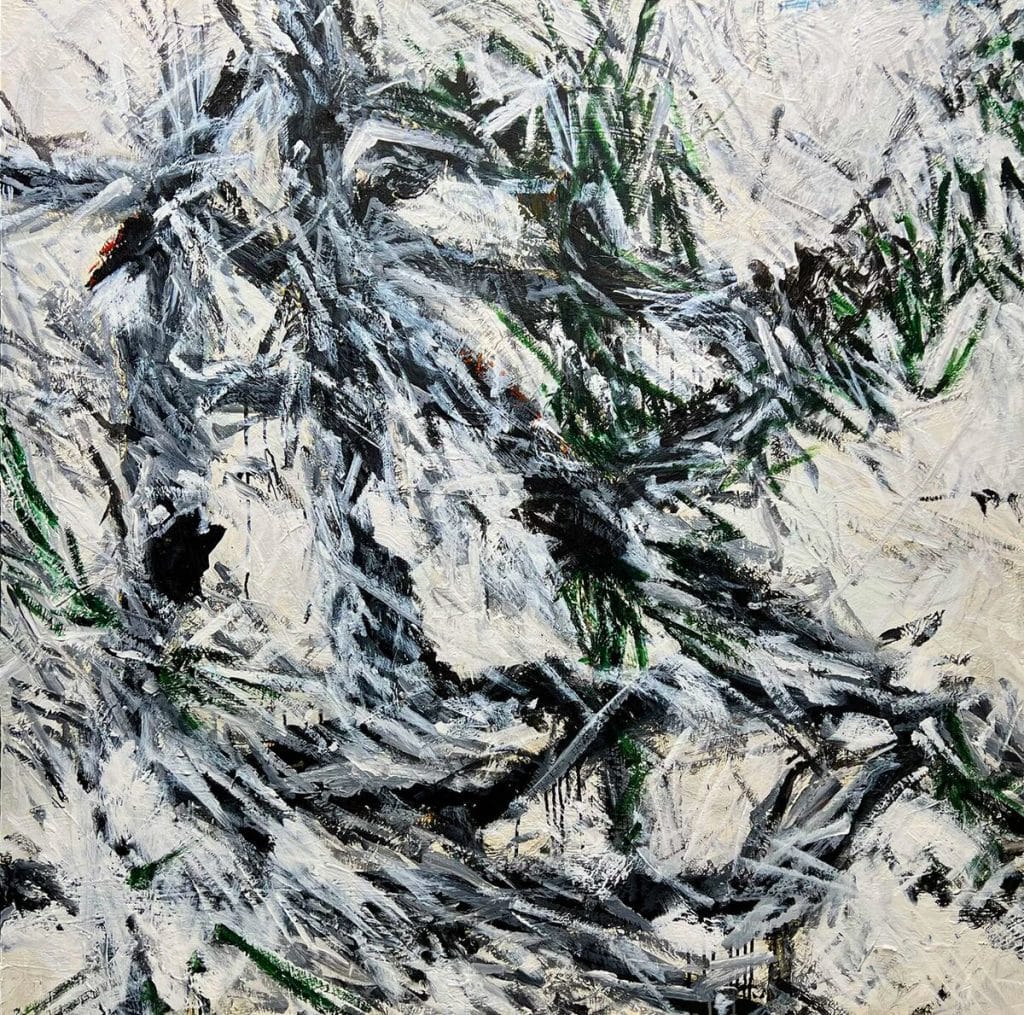
To the extent that there’s an “image” in a piece, it continually comes into focus and then dissolves. It pulses but it’s just one facet among the universe of memory/feelings/emotions that go into creating a painting. A representational image is sometimes a helpful anchor to unlock whatever I’m working through but, of course, it is altered by time and perspective and so will be altered on the final piece.
What’s next for you—are there themes or techniques you’re excited to explore further?
Subject-wise, I’m finding that only now do I have the emotional perspective and maturity to tackle some dark themes, like the AIDS war that ravaged us in the 80s and 90s, as well as some of the personal addictions that it helped bring into being.
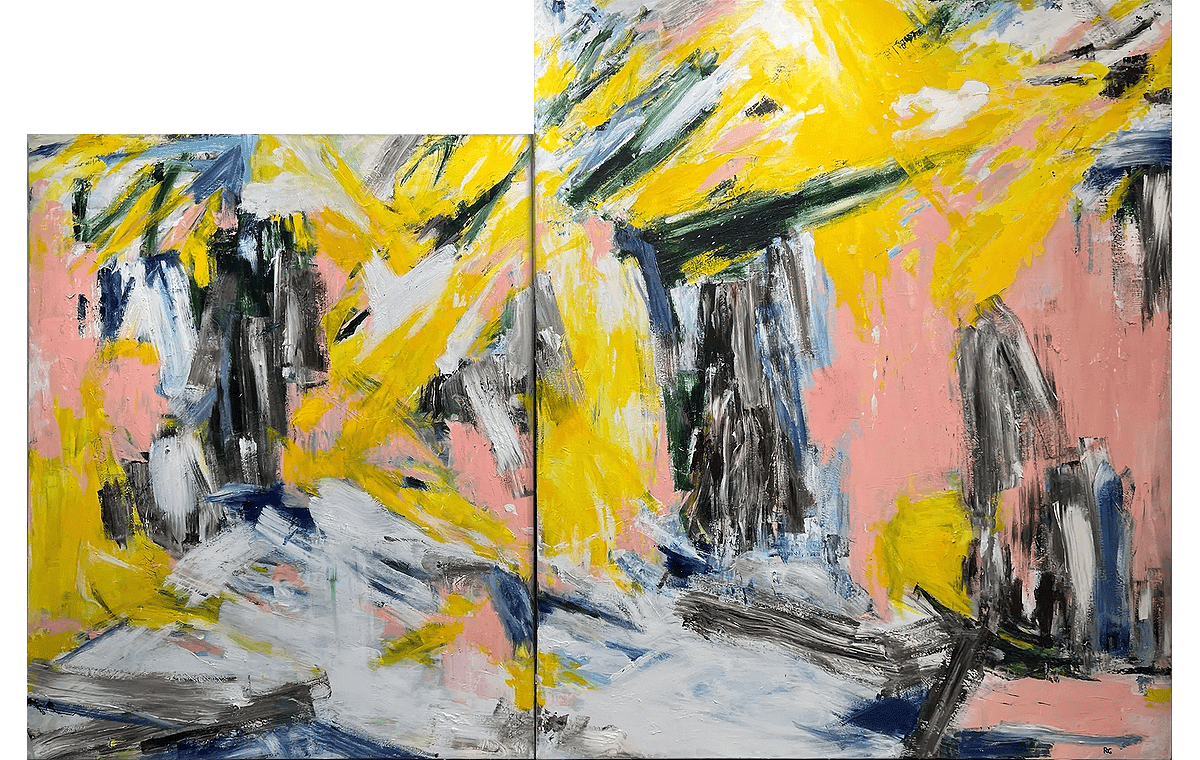
Also, for the past 10-15 years, color has been an obsession—when and why they work together, when and why they don’t, and how they can work together even when they don’t. I think I’m finally achieving a comfort level with color where I can go back and revisit monochromatic painting, which was an early focus for me. Perhaps I’ll explore shapes, shading, and volumes for a while, instead of mark-making, which comes much more naturally to me.