Color and Chaos – Bimbi Larraburu
9/16/2016
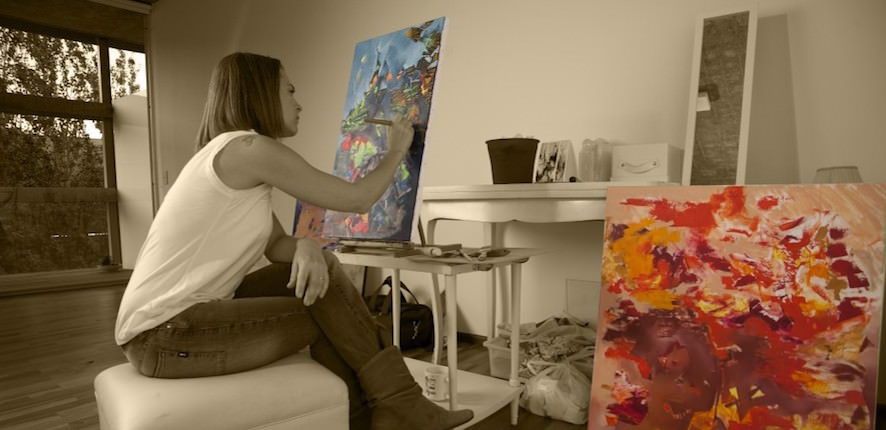
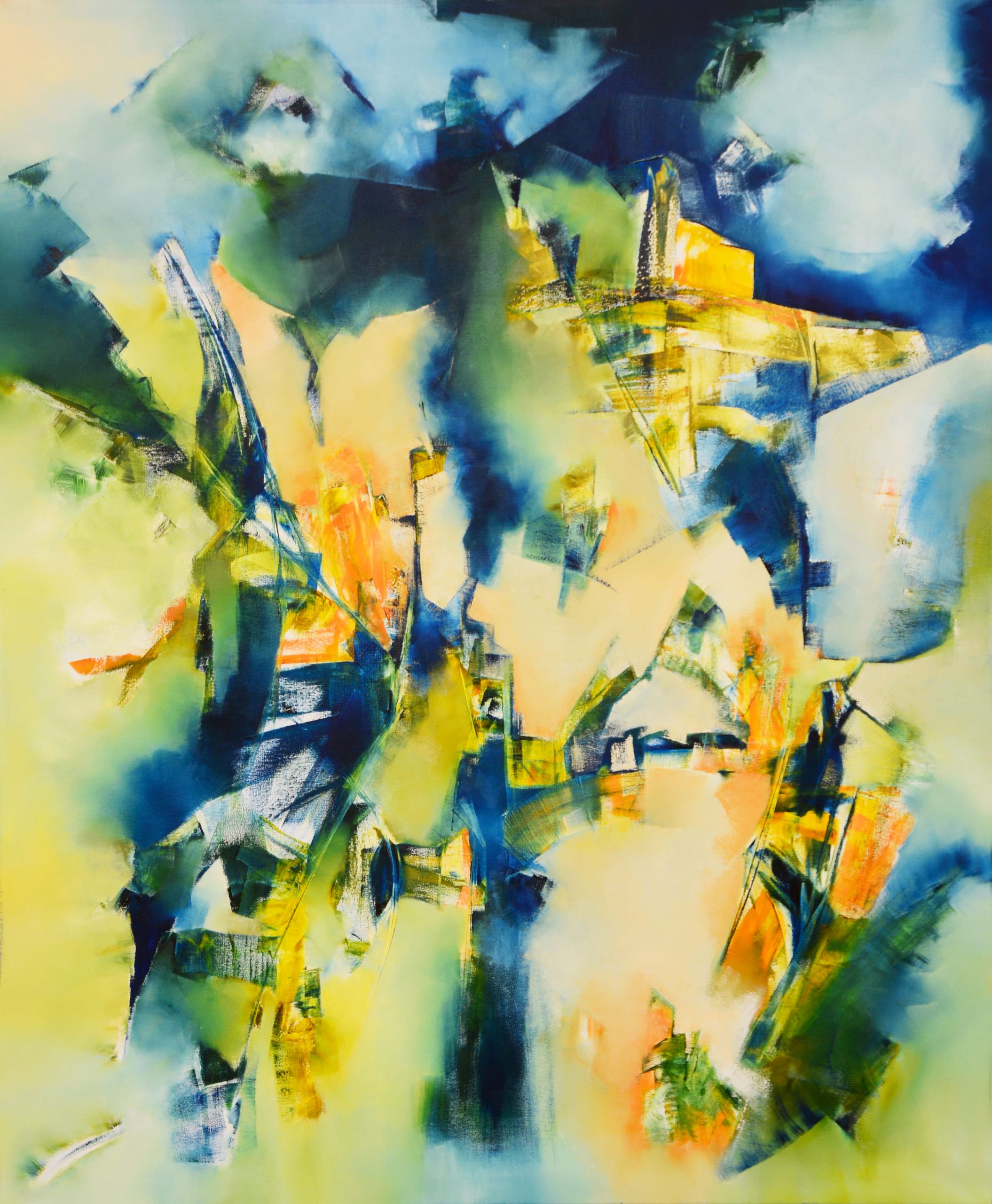
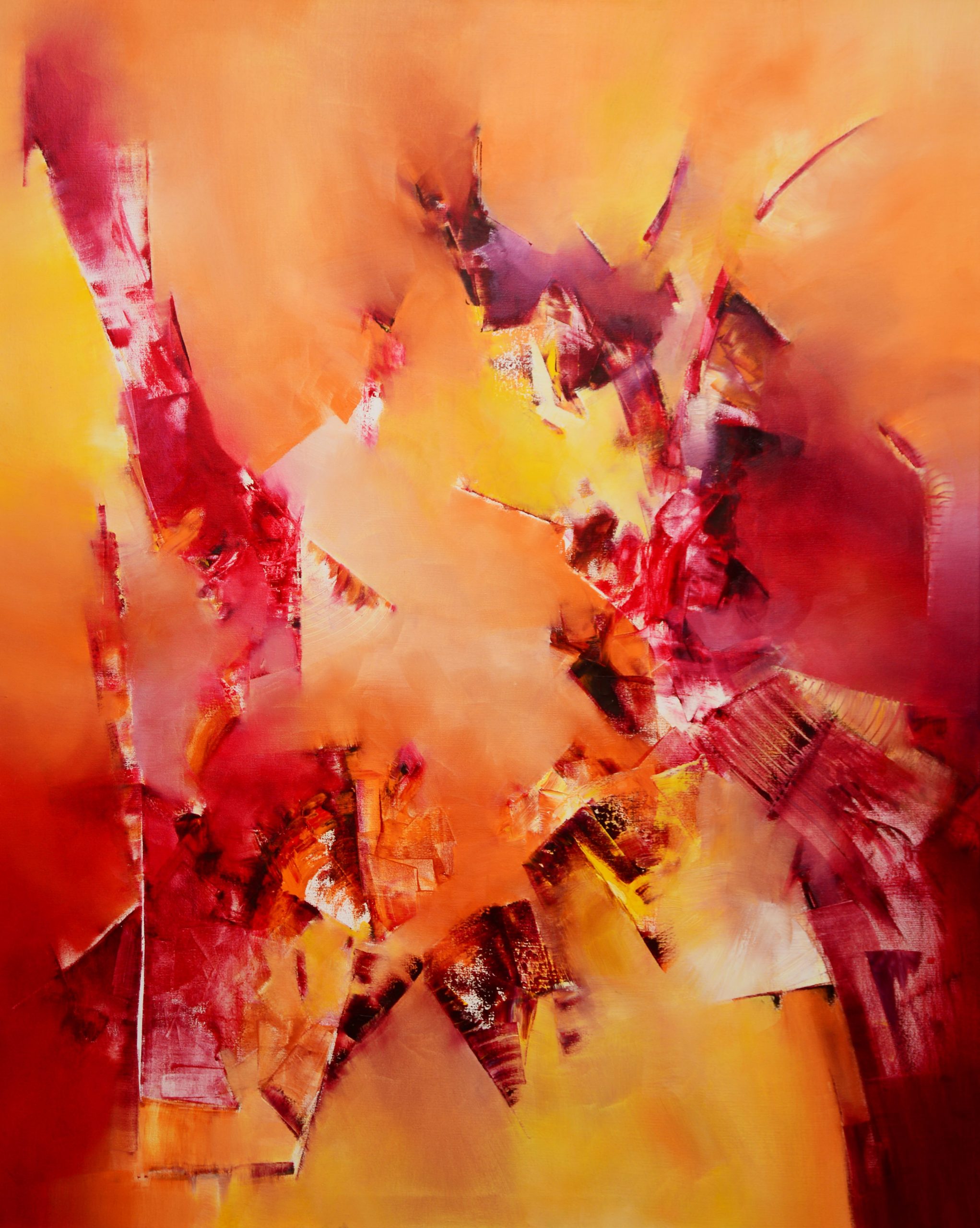
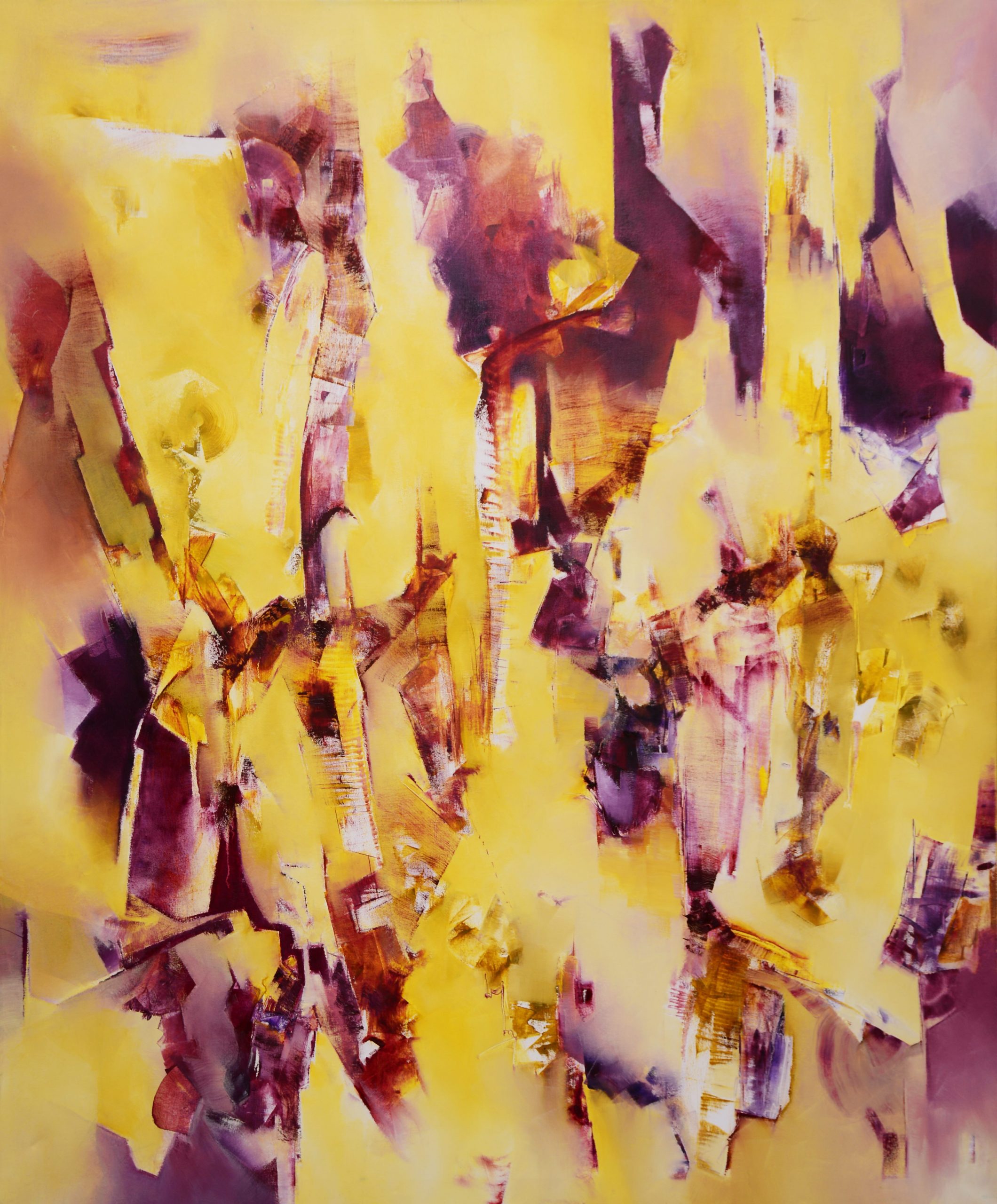
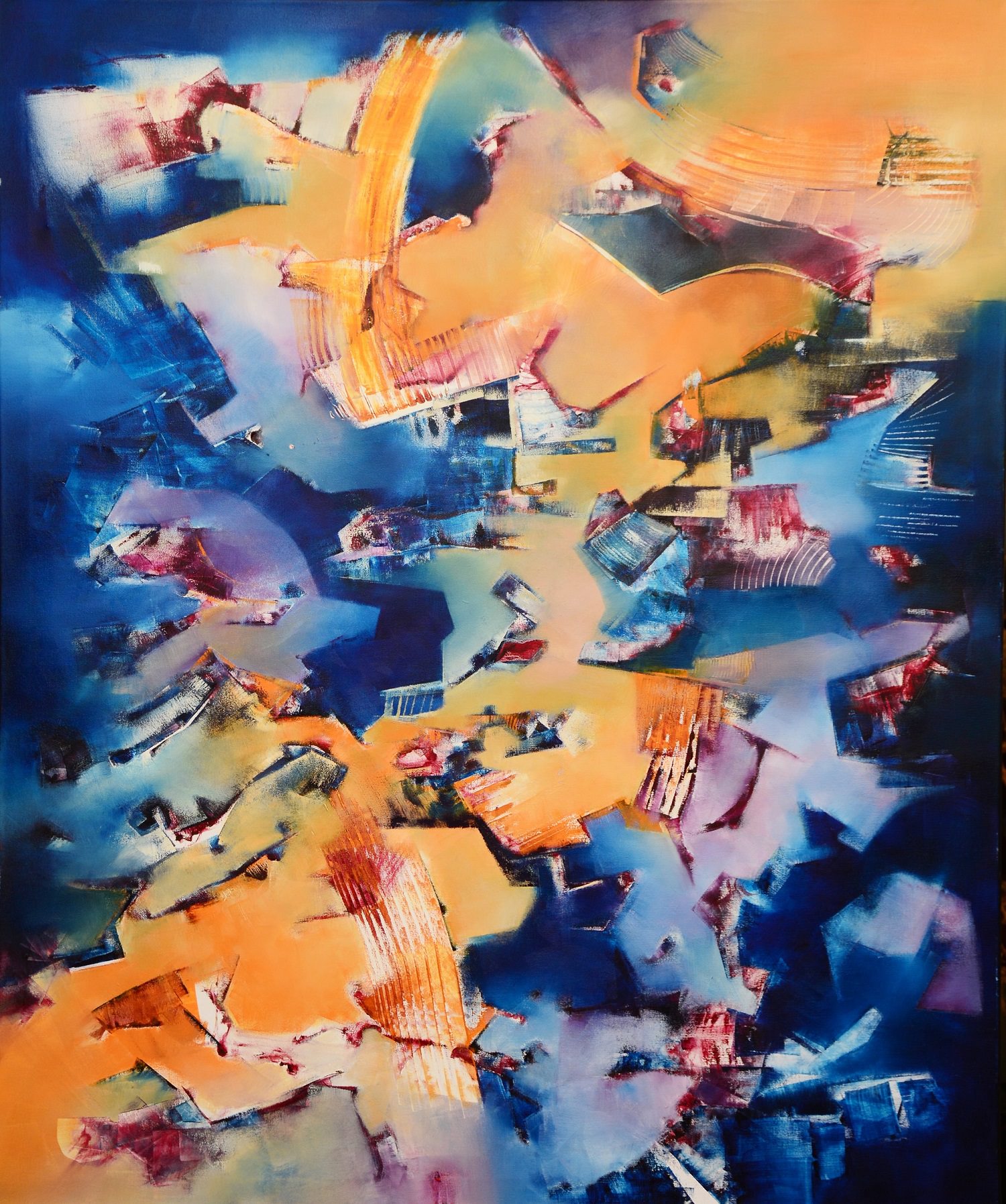
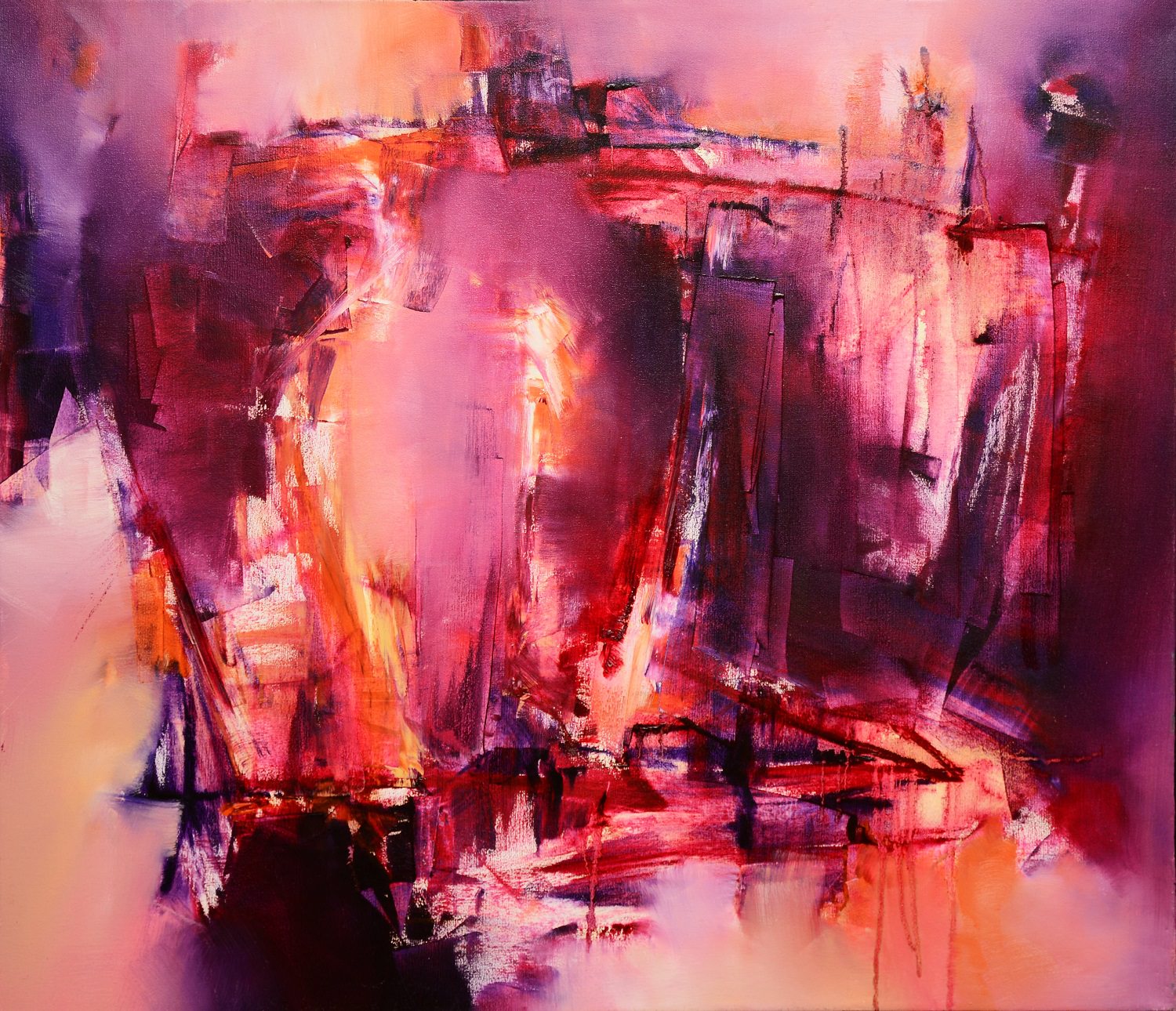
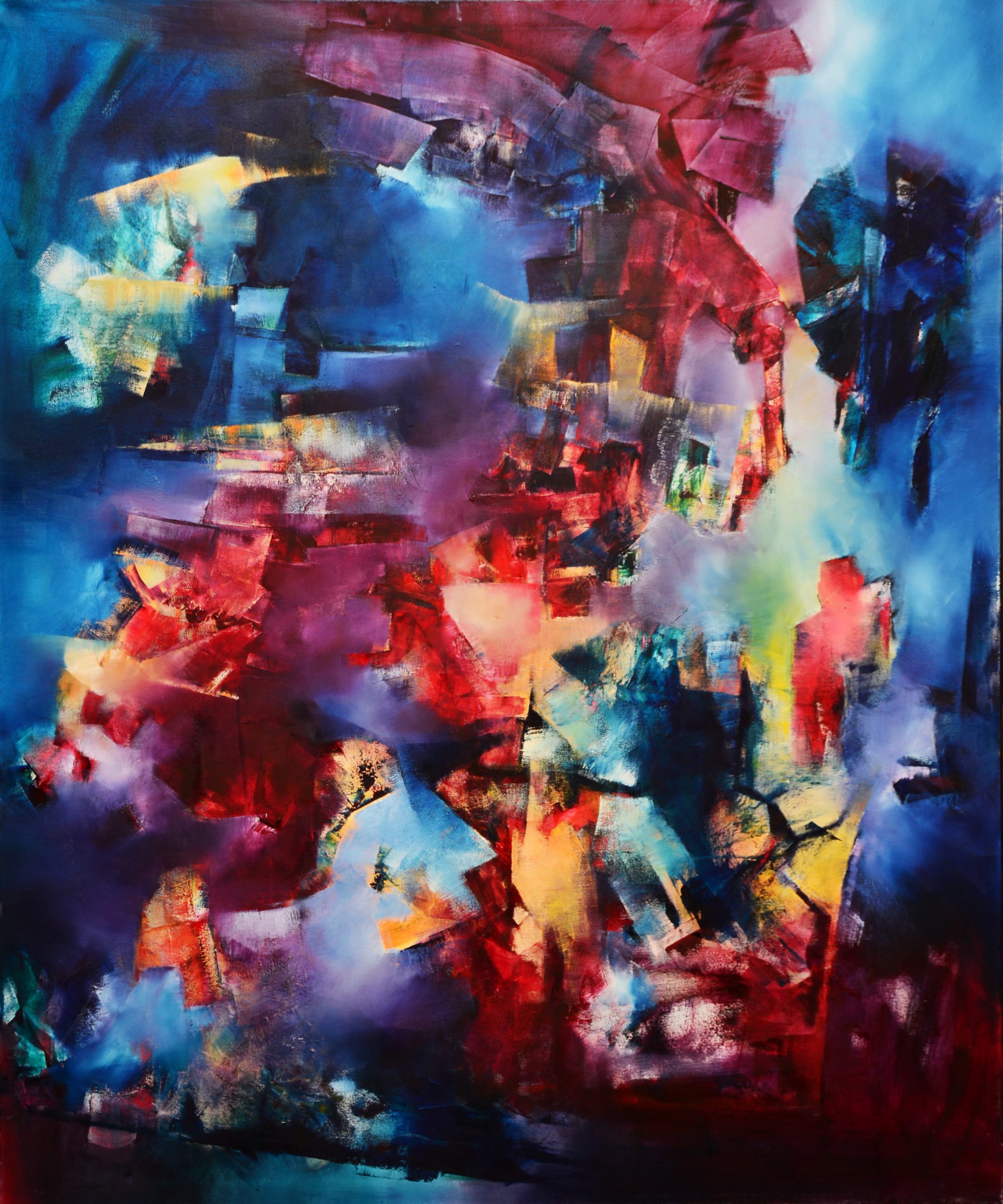
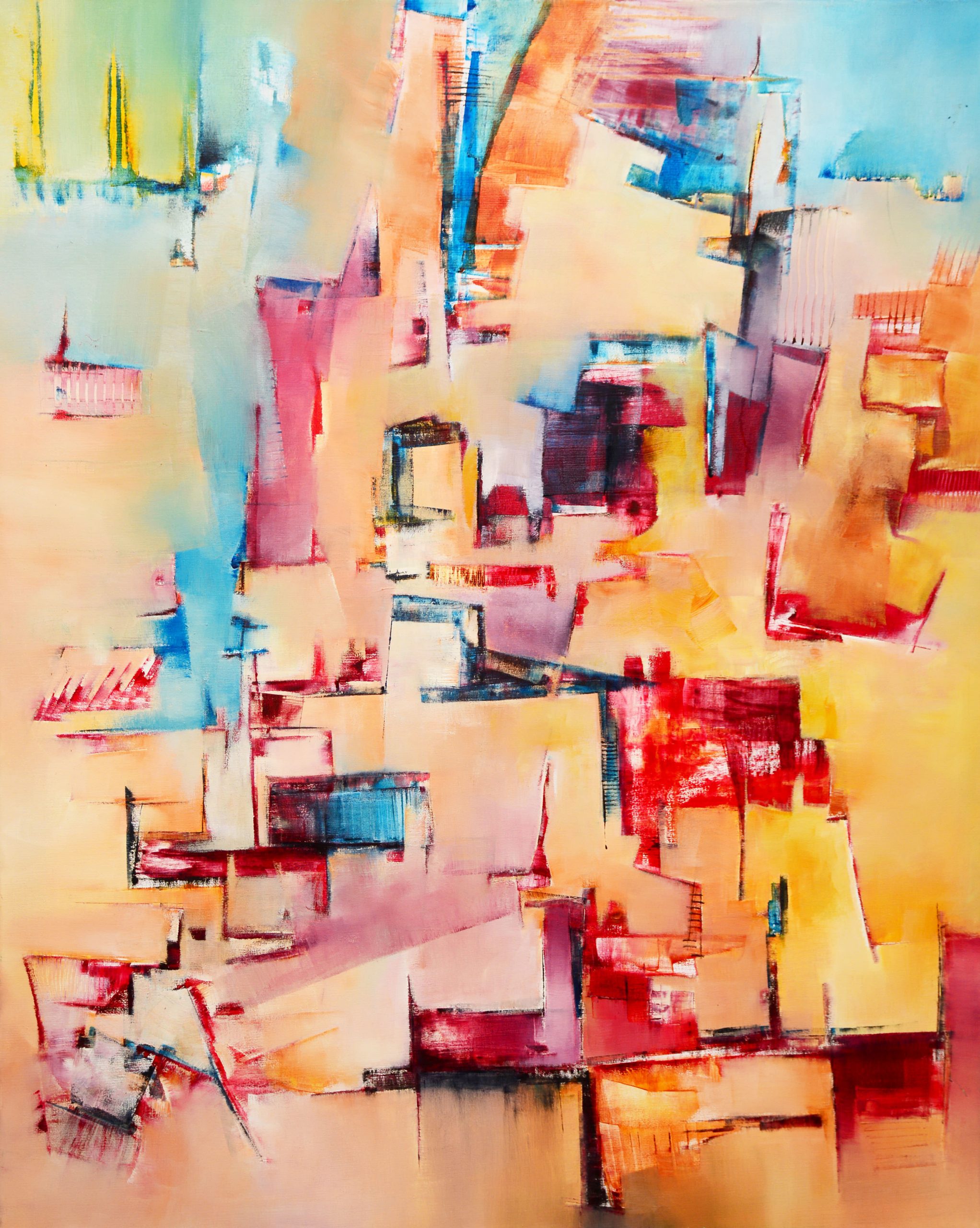
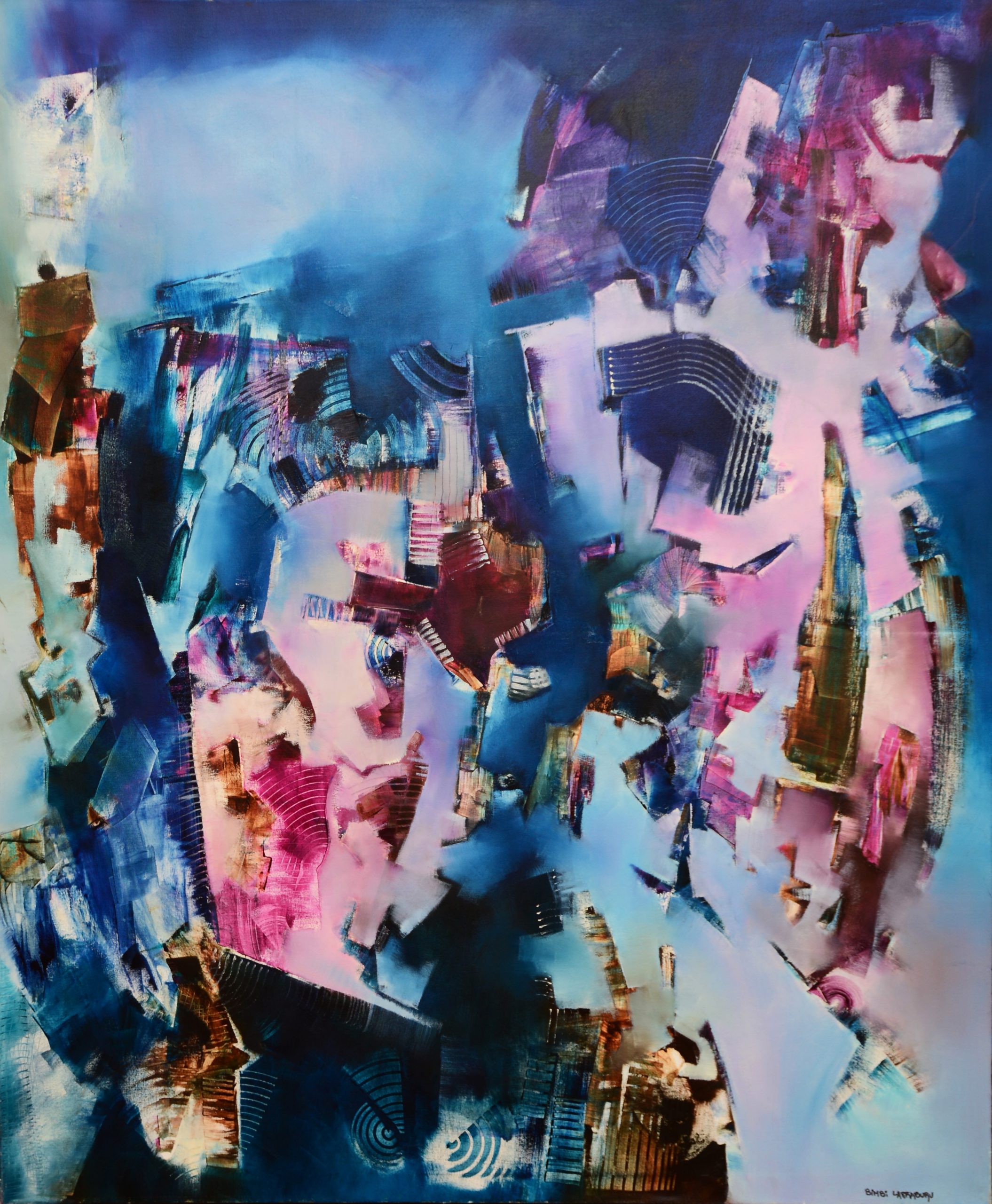
Some artists find a blank white canvas to be daunting. With limitless possibilities to be explored, how can you know if what you’re doing is the best thing? Bimbi Larraburu sees her canvas not as a challenge, but as an open space to express her inner self through color, line, and shape. Bimbi’s works give way to a chaotic visual effect, one that simultaneously excites and soothes any viewer. The colors are vibrant and the composition is random, and yet everything works together to create perfectly balanced abstract pieces.
Bimbi has lived in Buenos Aires, Argentina for her whole life, and continues to work there today. She was always interested in the arts from a very young age but was encouraged to pursue a traditional university career, causing her to study Architecture and Advertising, elements of which she continues to bring into her art. Bimbi also studied under the Argentinian abstract painter Heriberto Zorrilla and learned the ways of the “Esencialismo” movement. In addition to her art, Bimbi loves to travel and manages a family real estate business in Argentina and the US.
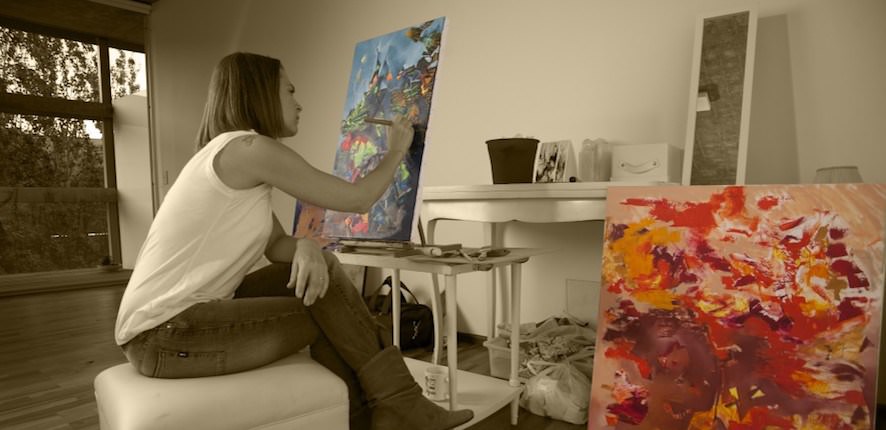
Being from Argentina, Bimbi answered some questions we had for her in her native Spanish language as well as in English. We have transcribed the interview in both languages here for all to enjoy! Read on to learn more about Bimbi’s story, as well as her techniques and inspiration.
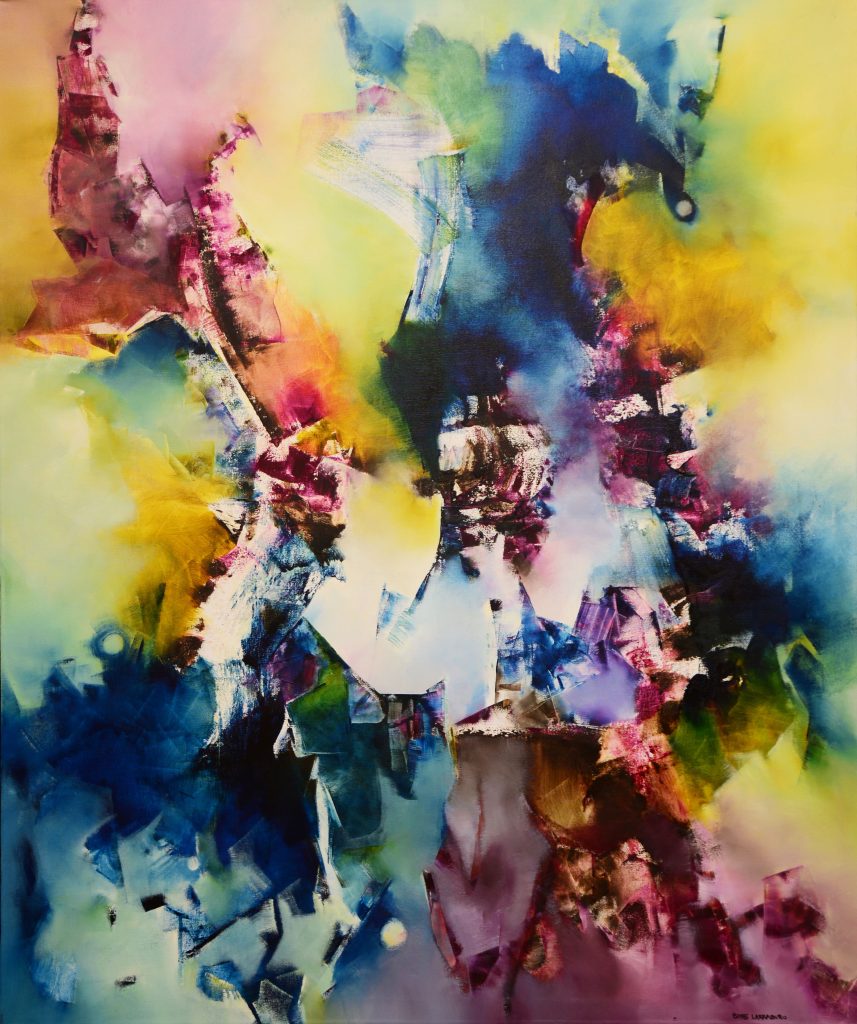
Color evidently plays a major role in your artwork. How do you decide on which colors to use in each piece?
Colors are my major motivation; so before placing them in my palette, I stare at my box of paints. I match up the colors and choose the ones I feel most drawn to. Each tube I open is a feast for my eyes. The chosen colors end up in my palette. The others return to the box to be used at another time, or maybe even later on the same painting because sometimes, during the process, I feel the need to use a different color; something that provides a contrast. This is why color selection is never set in stone as I work on a painting.
Your paintings include hard lines between layers of colors. What tools do you use to create these forms? What is the desired effect?
My paintings articulate through planes of colors, which, as they encounter, at times generate structures. The tools that I use are diverse; from soft brushes or spatulas to rubber brushes.
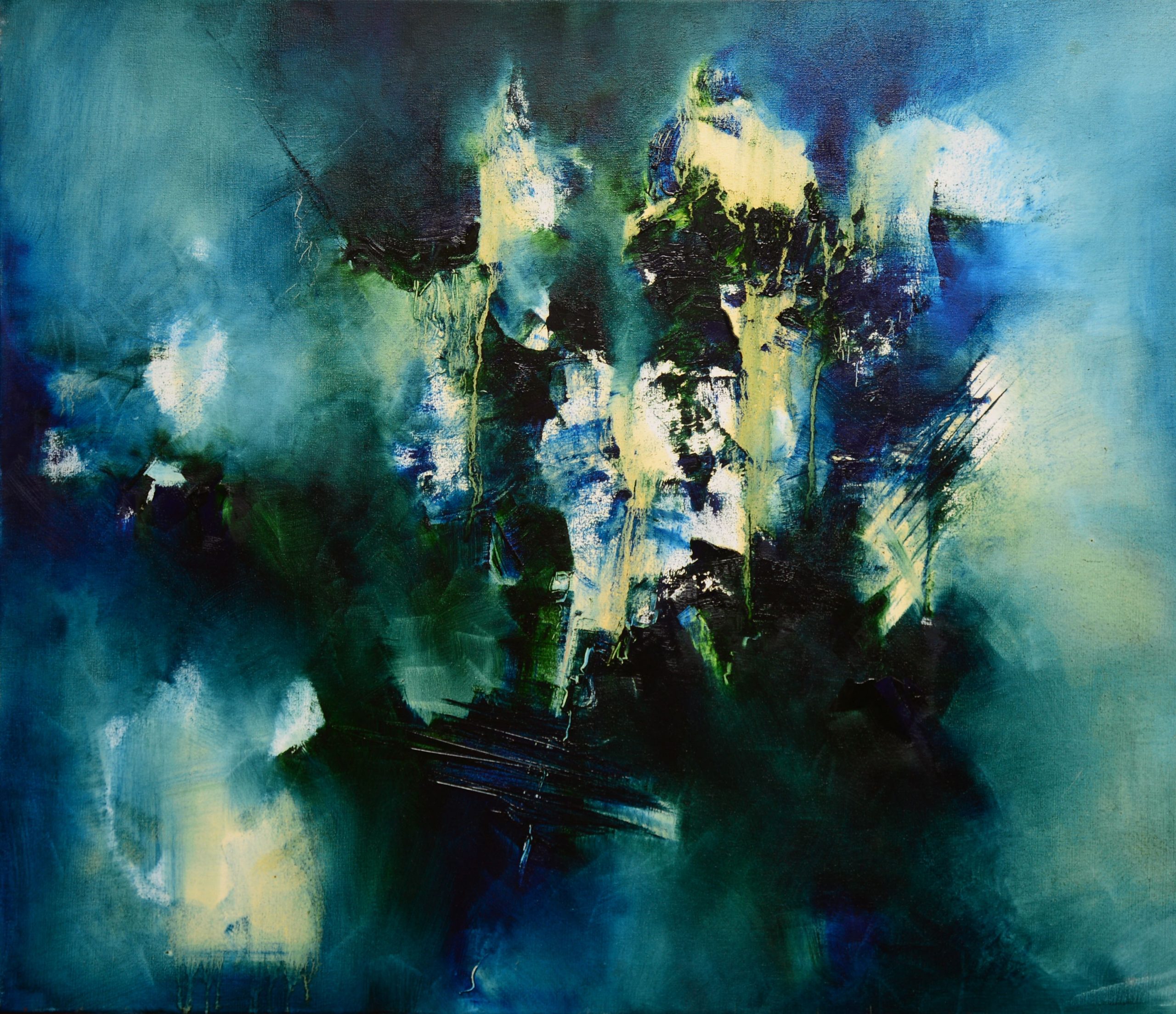
Are you ever surprised by the final product when you complete an artwork?
Mostly, I’m surprised at what happens while I’m working. And I am also amazed at where I have come in my career.
Other times, it is simply an attractive and provocative apocalyptic atmosphere that shows up before me.“
You studied under Heriberto Zorrilla, a well-known abstract artist in Argentina. How did your time with him influence your style?
Over 12 years ago, I worked in the workshop of Heriberto Zorrilla. When I first got there, I used mainly my architecture and design knowledge, and, little by little, he gave me the tools I needed to become an artist. I am grateful to him not only because of what he taught me about painting but also for guiding me to become who I am today.
Can you tell us more about the “Esencialismo” movement that you are a part of?
“Esencialismo” is an Argentinian pictorial movement created in the 1980s by my teacher, Heriberto Zorrilla, and developed with Helena Disetefano, his wife and travel companion. This movement proposes an attitude, a way to ‘stand’ before the art. The essentialist artist, while working on the canvas, manipulates, orders, and chooses those elements that later will become symbolic of the feeling of the artist. My personal approach is that during the development of the picture, I start to follow the ideas that appear in front of me. That moment of revelation is when I find both a concept and a name for my artwork.
How did growing up in Argentina affect your art career?
Fortunately, Argentina is a free country with very broad tastes. I have had many opportunities to show my work in important spaces, such as museums, universities, and public spaces.
“One day just by chance I found a workshop on abstract art, and suddenly I knew what I would be doing for the rest of my life.”
Do you think your studies in advertising and architecture influence your work in any way?
Currently, in many of my artworks, I portray structures or urban atmospheres that I feel are related to my architecture studies. In relation to advertising, I believe the whole creative process is a kind of brainstorming where, instead of ideas, the colors create the final product.
How does your love for travel relate to your artwork?
Painting and traveling are my greatest passions. Traveling to see fairs like Art Basel or taking a workshop at the Art League of NYC or, like now, traveling for my exhibition, delights me with pleasure and satisfaction.
What do you want your viewers to take away from your work? Do you expect them to see exactly what you see when viewing your work?
I have a very clear position about the viewer. They are the ones who end up finishing the work. I really like to see somebody looking at one of my paintings. My intention is that something occurs in the beholder; I don’t care what is it as long as they feel something. That fills me with satisfaction.
How has your found love for painting changed your view of the world?
Painting has not changed the way I see the world. It has changed the way I stand before the world. It has changed the way I see my inner worlds and given me a way to represent them on the canvas.
Collecting art is a highly involving and emotional experience. The artist’s process and intention are some of the factors that make one fall in love with his or her piece. Learn more about our artists’ creative methods and fascinating techniques in the Center Stage and Artist Techniques categories.